Roadworks Explained
Understanding road reinstatement
An educational guide to how roadworks happen, what reinstatement means, and how the UK's statutory guarantee system is designed to protect the quality of repairs.

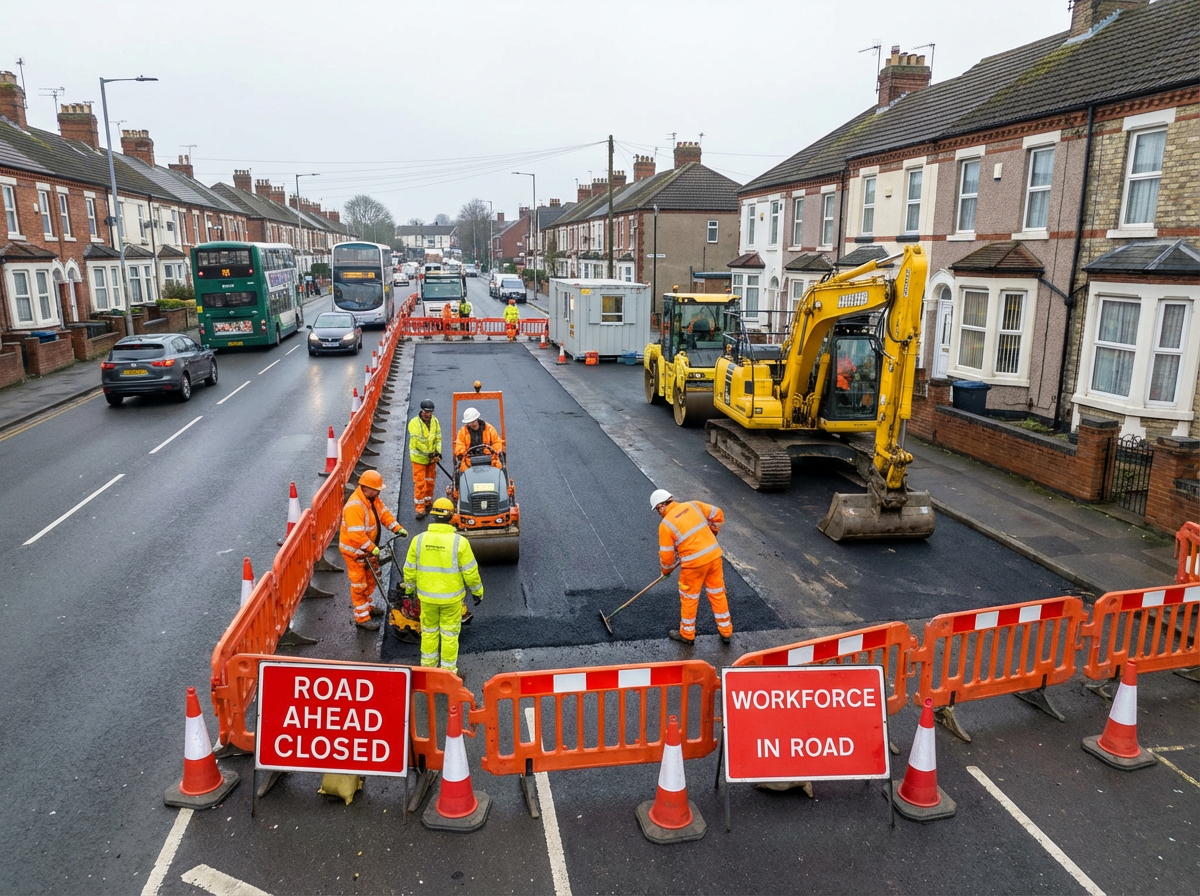
Why roadworks happen
The UK has an extensive network of underground infrastructure — water pipes, gas mains, electricity cables and telecoms ducts — that runs beneath our roads and pavements.
Maintaining this infrastructure requires periodic access. When a pipe bursts, a cable fails or capacity needs to be upgraded, the road must be opened. This is a routine and necessary part of managing the country's essential services.
What reinstatement means
Reinstatement is the process of restoring the road after excavation. It involves backfilling the trench with appropriate materials and restoring the road surface to the required standard.
Good reinstatement is invisible — the repaired section should perform as well as the surrounding road. Poor reinstatement leads to surface defects, subsidence and premature failure.
How roadworks are coordinated
Before roadworks can take place, utility companies must notify the relevant highway authority.
In England this notification is managed through Street Manager, the national digital system used to coordinate roadworks activity across the country.
Street Manager allows highway authorities to see planned works, coordinate activity between utilities and reduce disruption to communities.
Road Guardian works alongside this system by providing monitoring and evidence of reinstatement quality after works are completed.
The statutory framework
New Roads and Street Works Act 1991
The primary legislation governing how utility companies carry out works in the highway. Sets out notification requirements, inspection powers and the basis for the guarantee regime.
SROH (Specification for the Reinstatement of Openings in Highways)
The technical standard that all reinstatements must meet. Sets out materials, construction methods and quality requirements.
Statutory Guarantee Periods
The period during which the utility is responsible for reinstatement failures. Typically two years for permanent reinstatements.
The challenge of long-term monitoring
While roadworks are carefully regulated, monitoring reinstatement quality over time can be difficult.
Guarantee periods can last several years and defects may develop long after works have finished.
Without clear inspection records, evidence and audit trails it can be difficult for councils to enforce remediation.
Road Guardian provides a digital platform that tracks guarantee periods, records inspections and maintains photographic evidence throughout the life of the reinstatement. Learn more about why this matters.
Common questions
Why do roadworks happen?
Roads are excavated to allow utility companies to install, maintain and repair the underground infrastructure that delivers essential services — water, gas, electricity and telecommunications. These networks run beneath our streets and require periodic access for maintenance and upgrades.
What is road reinstatement?
Road reinstatement is the process of restoring a road surface after it has been excavated. When a utility company opens a road, they are legally required to reinstate it — to fill the excavation and restore the road surface to the standard it was in before the works, in accordance with the Specification for the Reinstatement of Openings in Highways (SROH).
What are statutory guarantee periods?
A statutory guarantee period is the period of time after reinstatement during which the utility company is responsible for any failure in the repair. For most permanent reinstatements, this is two years. If the reinstatement fails during this period, the utility must remedy it at their own cost.
Who is responsible for road repairs after utility works?
The utility company that carried out the works is responsible for the reinstatement. They must ensure the road is restored to the required standard and maintain that standard throughout the guarantee period. The highway authority (usually the local council) has powers to inspect reinstatements and require remediation if standards are not met.
What standards must reinstatements meet?
Reinstatements must comply with the Specification for the Reinstatement of Openings in Highways (SROH), which sets out detailed technical requirements for materials, construction methods and surface quality. These standards are designed to ensure that reinstated roads perform as well as the surrounding road surface.
Related Reading
How It Works
Road Guardian's step-by-step monitoring process explained.
What Is SROH?
The reinstatement standard that governs road repair quality.
What Is a Section 50 Licence?
A guide to street works permits for private excavations.
Britain's Pothole Crisis
The financial toll of poor road maintenance on UK drivers.